CASE STUDY
Offshore Emissions Monitoring: Persian Gulf Platform
Overview
A fixed offshore production platform in the Persian Gulf presented a very different methane monitoring challenge than a typical onshore oil and gas site. Remote access, harsh marine conditions, long distances across the platform, and customer-specific deployment requirements all had to be addressed without sacrificing installation speed or monitoring performance.
MethaneTrack™ was deployed to provide close-proximity continuous methane monitoring across priority offshore assets, helping the operator gain earlier visibility into emissions events while also evaluating how the system could support broader operational workflows, software integration, and future expansion across nearby infrastructure. The project quickly demonstrated that continuous monitoring can be deployed effectively in demanding offshore environments using compact hardware, flexible endpoint placement, and a software architecture capable of meeting strict customer requirements.
About the Site
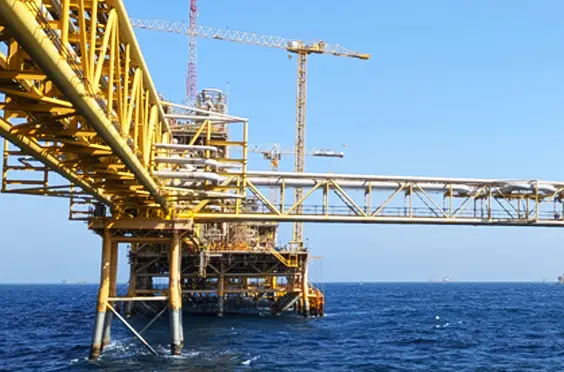
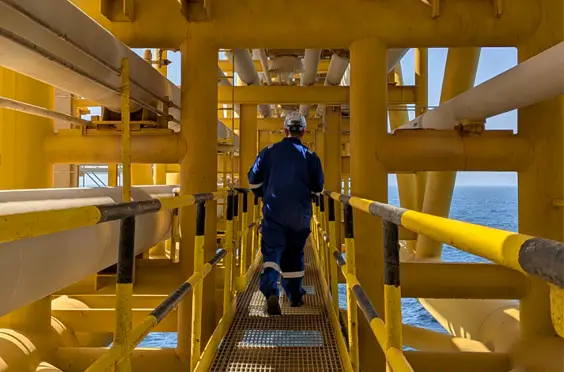
This deployment took place on a fixed offshore production platform in the Persian Gulf that serves as part of a larger offshore oil field network. Multiple surrounding well platforms feed into the site, where production is routed through key processing and separation assets before export back onshore. The platform includes major separator equipment, flare-related infrastructure, long pipe runs, multi-level access areas, and distant sections connected by gantries above the water.
Unlike a floating production vessel, this site is a fixed offshore platform with approximately 50 personnel housed on the accommodation side and additional infrastructure distributed across adjacent areas. Offshore access is handled by helicopter or boat, making transportability, install speed, and operational simplicity especially important.
Customer
Region
Installation Type
Product
Asset Monitoring
Gas Type
Challenges
Offshore methane monitoring introduced logistical, environmental, and operational challenges not typically seen at land-based sites. Equipment and personnel were transported by helicopter, making installation speed, size, and weight critical within a limited offshore work window. The platform’s harsh marine environment and distributed infrastructure required reliable communication across multiple levels, long pipe runs, and open-air spacing. Endpoint placement also needed to remain flexible as customer priorities evolved around separator and flare-related assets. In addition, the deployment had to support emissions visibility and operational workflows while meeting in-country data hosting and approved cloud requirements.
NevadaNano's Role
NevadaNano deployed MethaneTrack™ on the offshore platform as a flexible close-proximity continuous monitoring solution designed to operate near priority emissions sources while remaining simple to transport, install, and adapt in the field.
Working alongside the customer and local support teams, NevadaNano helped configure monitoring coverage, install endpoints across multiple platform levels around key assets, commission the gateway and anemometer, and bring the system online within the limited offshore work window. The team also guided the customer through the software side of the deployment, including the user interface, dashboard outputs, notifications, API discussions, and future opportunities for data integration into internal systems such as Power BI and work-order platforms.
Beyond the physical deployment, NevadaNano also supported the customer’s broader digital and security requirements by demonstrating how MethaneTrack™ can be deployed in-country and aligned with approved cloud-provider expectations in markets with strict data residency standards.
Process and Implementation

1. Offshore Deployment Planning and Rapid Installation
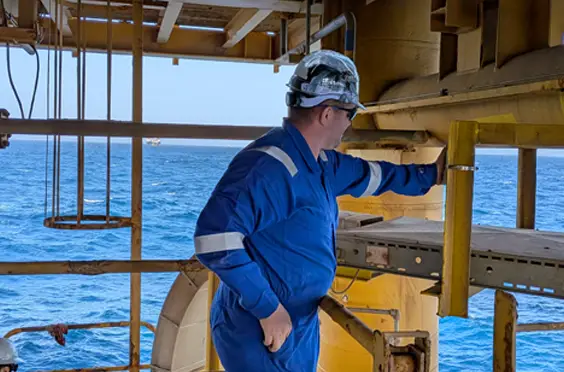
Because platform access depended on helicopter transport, deployment logistics required a monitoring system that was compact, lightweight, and practical to install within a limited offshore work window. MethaneTrack™ hardware was transported offshore and installed in approximately two and a half hours using standard mounting hardware and straightforward field procedures.
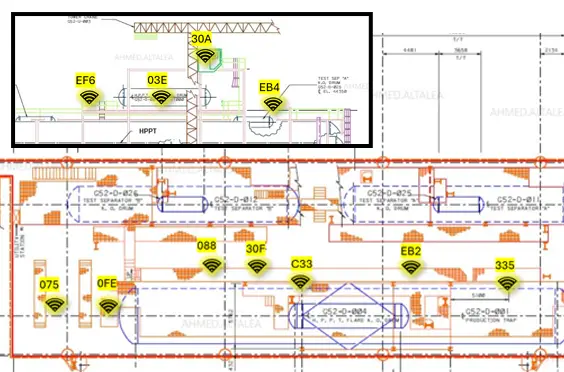
The deployment included approximately 12 endpoints distributed across multiple platform levels, along with gateway and anemometer infrastructure supporting continuous monitoring across the site.
2. Offshore Platform Methane Monitoring Coverage
While an initial monitoring strategy was developed before deployment, final endpoint placement was adjusted onsite to align with customer-identified priority assets and real-world platform conditions.
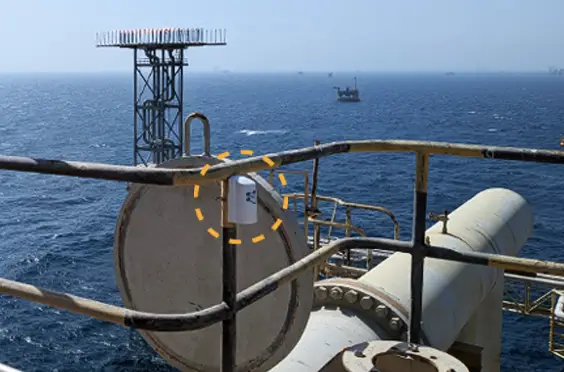
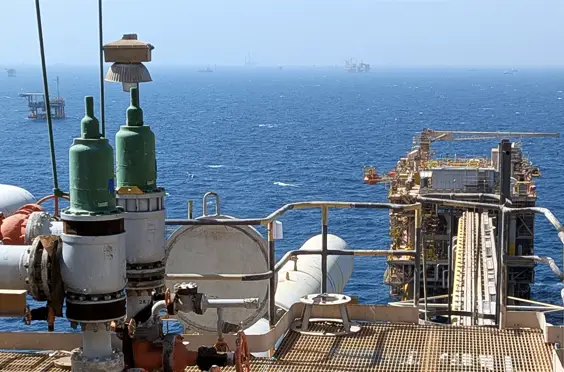
Endpoints were deployed around separator equipment, flare-related infrastructure, and additional platform areas connected by long gantries, including sections located roughly 400 meters away. MethaneTrack™ maintained reliable communication across the large, multi-level offshore environment using its standard LoRa-enabled gateway architecture.
3. Early Detection and Continuous Event Monitoring
Within the first weeks following commissioning, MethaneTrack™ detected a methane emissions event near flare-related infrastructure on the upper level of the platform. The event demonstrated the system’s ability to identify and localize short-duration emissions events in a complex offshore environment shortly after deployment.
Continuous monitoring provided visibility into the timing, duration, and location of emissions activity across the platform, helping validate system performance under real-world offshore operating conditions.
4. Workflow Integration and Enterprise Deployment Requirements
Beyond emissions detection, the deployment also evaluated how continuous monitoring data could integrate into broader operational workflows. Discussions included dashboard visibility, notifications, API access, Power BI integration, and compatibility with internal work-order systems.
The project also demonstrated MethaneTrack™’s ability to support customer-specific cloud and in-country data hosting requirements, helping align the deployment with enterprise security and data residency expectations.

Results and Impact
Although still in its early stages, the deployment has already demonstrated several key outcomes.
MethaneTrack™ was transported offshore, installed in approximately two and a half hours, and commissioned across a complex, multi-level platform. The system maintained reliable communication across long distances and challenging conditions, confirming the viability of close-proximity continuous monitoring in offshore environments.
Within the initial monitoring period, the system detected a methane emissions event lasting approximately 58 minutes, with a quantified emission rate of 0.9 kg/h and a total estimated volume of 0.91 kg. While modest in scale, the event confirmed the system’s ability to detect, quantify, and localize short-duration emissions shortly after deployment.
The deployment also highlighted the importance of combining reliable hardware with actionable, integrated data, delivering early operational visibility while supporting emissions tracking and workflow integration. As part of a broader Gulf production network, the platform also represents an opportunity for future offshore and onshore monitoring expansion.