CASE STUDY

Abandoned Well Methane Monitoring: Ontario, Canada

Case_Study_Wheatley_Featured

Overview

Wheatley, Ontario had experienced repeated gas-related incidents linked to old, improperly sealed abandoned natural gas wells beneath residential areas. One well in particular raised major safety concerns. The MethaneTrack™ Automated Emissions Monitoring System was deployed to provide Close-Proximity Continuous Monitoring™ (CPCM™), giving officials real-time visibility into changing emissions and supporting faster, safer decision-making.

About the Site

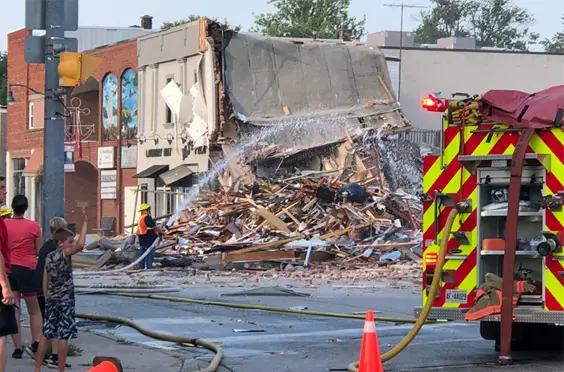
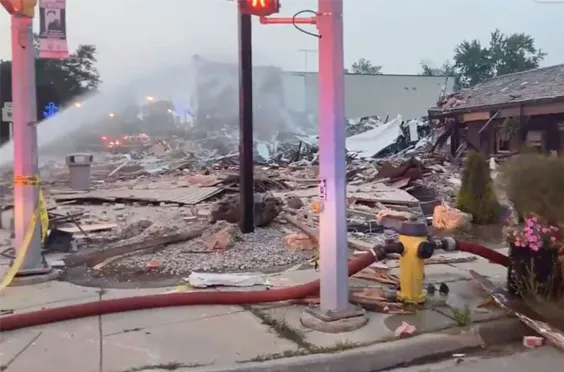
The abandoned well sat in the center of a densely populated neighborhood surrounded by homes, local roads, and pedestrian areas. On Aug. 26 at 6:13 p.m., an explosion flattened The Pogue, a local pub, destroying a neighboring building and injuring about twenty people. Earlier leaks in the same area had already triggered evacuations and emergency declarations after gas surfaced through mud, water, and building cracks. These events made it clear that gas movement through the subsurface was highly unpredictable. As part of the response, the town required a monitoring solution that operated around the clock, provided close-range coverage, and could detect early, low-level changes that signaled a developing problem.

Wheatley Case Study Blast Explosion Site

Customer

Public Safety Authority

Region

Ontario, Canada

Installation Type

Abandoned Well Monitoring Site

Product

MethaneTrack™

Asset Monitoring

Abandoned Well, Surface Gas Migration, Public Safety Zones

Gas Type

Methane

Challenges

• The leak behavior could shift rapidly, creating issues before anyone noticed
• The well was located in a populated residential area
• Periodic inspections could not capture intermittent or time-dependent leaks
• Daily and seasonal temperature shifts caused underground pressure changes that influenced methane and H2S releases
• Officials needed a highly reliable system that delivered automated alerts when conditions changed
• The town required low concentration detection without onsite personnel

NevadaNano's Role

NevadaNano deployed MethaneTrack™ to provide a continuous safety layer around the abandoned well. The goal was to enhance public safety through automatic 24/7 detection and real-time alerting that supported rapid awareness and intervention.

MethaneTrack™ also offered practical advantages for an emergency deployment. The system requires no field maintenance for the life of the device, installs quickly, and operates without cables or external power infrastructure. Its low cost of ownership and inherently scalable design make it well-suited for situations where additional coverage or longer-term monitoring may be required, while still delivering dependable performance in harsh conditions.

Process and Implementation

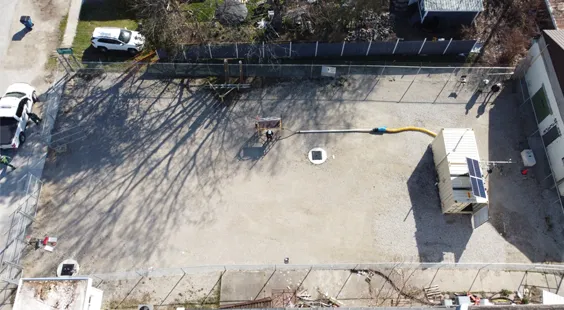
Wheatley Case Study Abandoned Well Monitoring Aerial View Site

1. Site Assessment and Wireless Sensor Placement​

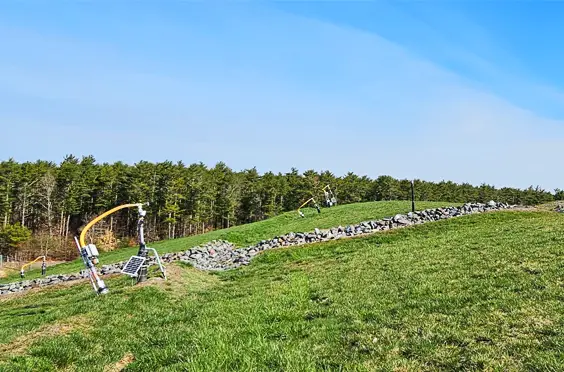
The team evaluated the well location, surrounding structures, and known emission behavior. Three wireless sensors were placed no more than two meters from the leak source to capture emissions at the closest practical range and ensure full coverage of the risk zone.
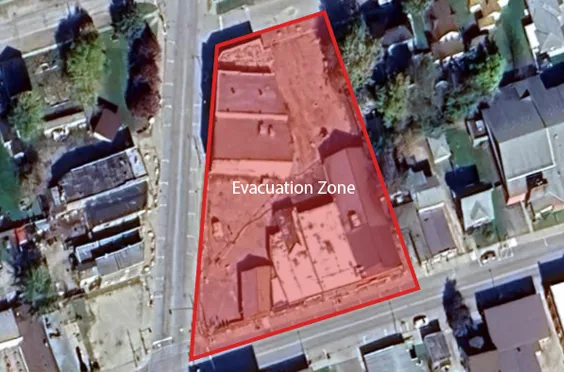
Wheatley Case Study Evacuation Zone

2. Abandoned Well Methane Monitoring with CPCM™

Close-Proximity Continuous Monitoring™ was central to this deployment. MethaneTrack™ continuously monitors methane levels at close range and captures fluctuations throughout the day caused by abandoned well pressure changes, and seasonal effects. This close-range approach offered more reliable methane leak detection than periodic inspections, especially as emissions shifted over time.

Wheatley Case Study Abandoned Well Monitoring

3. Low Concentration Detection

MethaneTrack™ detects emissions at low ppm levels, which is critical for abandoned wells that can transition from small, intermittent releases to elevated concentrations within minutes and hours. Detecting these early-stage changes allowed for timely intervention before conditions intensified.
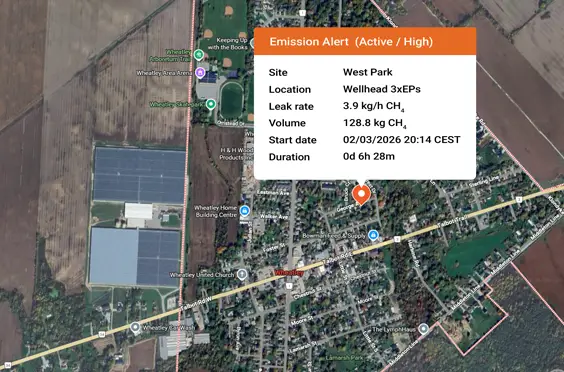
Case_Study_Wheatley_Leak_Alert

4. Automated Notifications​

The system sends automated alerts when methane readings exceed configured thresholds. This eliminates reliance on manual surveys and provides authorities with real-time awareness of any emerging risk.
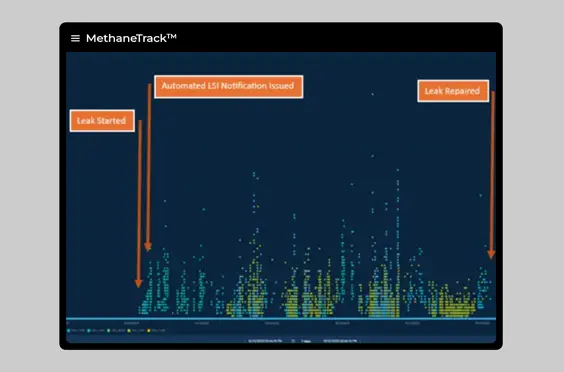
Case_Study_Wheatley_UI_Notifications

5. User Interface and Dashboard

Historical events, trend charts, and trend reports are all available on a web interface for ease of review.
Results and Impact

MethaneTrack™ provided the community with a reliable automated safety layer for the abandoned well. Following the explosion, conditions around the site remained unstable for months, and MethaneTrack™ offered continuous monitoring during a period when remediation teams could not be onsite.

The system delivered:
• Early warning through automated alerts
• Strong detection coverage through the three-sensor configuration
• Reduced dependence on manual inspections
• Clear insight into leak patterns that supported safety planning
• Continuous data that captured daily and seasonal variations in emission behavior
• Improved readiness for evacuation or intervention

By giving authorities continuous visibility and earlier insight into potential hazards, MethaneTrack™ supported a proactive approach and significantly strengthened public safety in a community with long-standing concerns surrounding the abandoned well.

Resources

Additional information about the Wheatley explosion can be found in a series of articles by the Daily Commercial News in Canada.


Related Case Studies

Landfill Emissions Monitoring: Gas Collection Optimization
Offshore Emissions Monitoring: Persian Gulf Platform
Compressor Station Emissions Monitoring: Permian Basin
Scroll to Top