Propane: A Sustainable and Efficient Alternative in Refrigeration and HVAC Systems
Refrigerants play a critical role in industries such as HVAC, refrigeration, and heat pumps, where they are used to transfer heat and maintain temperatures in controlled environments. Over time, the demand for more efficient, eco-friendly, and safe refrigerants has grown, driven by concerns about climate change and regulatory pressures. Propane, a natural refrigerant, has emerged as a leading alternative to traditional synthetic refrigerants, offering a range of benefits.
The Role of Refrigerants in HVAC, Heat Pumps, and Refrigeration
Refrigerants are used in HVAC (Heating, Ventilation, and Air Conditioning) systems, heat pumps, and refrigeration to absorb heat from one area and release it in another. These gases undergo phase changes (from liquid to gas and back) as they move through the system, making them essential for heat exchange processes.
- HVAC systems rely on refrigerants to regulate temperature and maintain comfort in residential, commercial, and industrial buildings.
- Heat pumps use refrigerants to either heat or cool spaces, depending on the direction of the refrigerant flow.
- Refrigeration systems are essential in industries such as food storage, pharmaceuticals, and industrial processes, where maintaining low temperatures is critical.
Synthetic vs. Natural Refrigerants
Refrigerants can be categorized as either synthetic or natural.
- Synthetic refrigerants, such as HFCs and HFOs, are chemically engineered to meet specific performance characteristics but often come with environmental and safety trade-offs, such as high GWP or flammability.
- Natural refrigerants, like propane (R290), ammonia (R717), and CO2 (R744), are naturally occurring substances that are typically more eco-friendly and have lower environmental impact compared to synthetic refrigerants.
Historical Use of Refrigerants: The Shift from HFCs
Historically, refrigerants like chlorofluorocarbons (CFCs) and hydrochlorofluorocarbons (HCFCs) were used widely in refrigeration and air conditioning systems. However, these substances were found to have a detrimental effect on the ozone layer, leading to their phase-out under the Montreal Protocol.
As CFCs and HCFCs were banned, hydrofluorocarbons (HFCs) became the preferred choice due to their relatively low ozone depletion potential (ODP). However, HFCs are potent greenhouse gases (GHGs) with a high global warming potential (GWP), meaning they contribute significantly to climate change. This led to further regulation and the search for alternatives.
The Global Warming Potential of Refrigerant Gases
The global warming potential (GWP) of refrigerants is a measure of how much heat a gas traps in the atmosphere over a specific time period, typically 100 years, compared to carbon dioxide (CO2). Gases with a high GWP can contribute significantly to climate change.
- HFCs have a high GWP, with some HFCs like HFC-23 and HFC-134a having a GWP in the thousands.
- Newer refrigerants aim to reduce GWP by using natural alternatives like propane (R290), CO2 (R744), and ammonia (R717).
| Refrigerant | Global Warming Potential (GWP) |
|---|---|
| HFC-23 | 14,800 |
| HFC-134a | 1,430 |
| Propane (R290) | 3 |
| C02 (R744) | 1 |
| Ammonia (R717) | 0 |
The Kigali Amendment and the Push for Low-GWP Refrigerants
In 2016, the Kigali Amendment to the Montreal Protocol was adopted with the goal of phasing down the production and consumption of HFCs. The agreement set targets for reducing HFCs and promoting the use of refrigerants with lower GWPs. As a result, many industries are shifting toward Low-GWP refrigerants, many of which are flammable and require careful handling.
Flammability Categorization of Refrigerant Gases
Refrigerant gases are classified based on their flammability:
- Non-flammable (A1)
These refrigerants pose no flame or ignition risk (e.g., R410A, R404A). - Mildly flammable (A2L)
These refrigerants can ignite under certain conditions (e.g., R32, R454). - Highly flammable (A3)
These refrigerants are highly combustible (e.g., R290 propane).
| High Flammability | A3 | B3 |
| Flammable | A2 | B2 |
| Lower Flammability | A2L | B2L |
| No Flame Propagation | A1 | B1 |
| Low Toxicity | High Toxicity |
While A3 refrigerants like propane are highly flammable, their natural occurrence and lower GWP make them an attractive option for industrial use, provided that proper safety precautions are taken.
What Makes a Good Gas for Industrial Use?
When selecting refrigerants for industrial applications, several factors are considered:
- Thermodynamic properties: The ability of the gas to absorb and release heat effectively is critical to the efficiency of the system for cost and emissions purposes.
- Energy efficiency: The refrigerant must be able to operate efficiently across a wide range of temperatures and pressures.
- Environmental impact: Low GWP and ODP are crucial for meeting regulatory standards and minimizing environmental harm.
- Safety: The refrigerant should be stable under normal operating conditions and pose minimal risks, such as flammability, toxicity, or pressure hazards.
The Pros and Cons of Various Natural Gas Refrigerants
Propane (R290), CO2 (R744), and ammonia (R717) are all natural refrigerants with distinct advantages and limitations. Propane is highly energy efficient, cost-effective, and environmentally friendly, with a low GWP of 3 and no ODP, making it ideal for small to medium applications. However, its flammability (A3) requires additional safety protocols. CO2 has a very low GWP of 1 and is non-flammable, making it a safe and environmentally friendly option, but it requires high-pressure systems, which can be bulky and costly, and is less efficient in low- and medium-temperature applications. Ammonia offers high thermodynamic efficiency and low GWP, making it perfect for large-scale systems, but its toxicity, pungent odor, and corrosive nature pose significant safety and maintenance challenges. Each refrigerant is suited to specific applications, with propane excelling in smaller systems, CO2 in high-temperature applications, and ammonia in large industrial systems.
Why Propane Makes a Great Refrigerant
Propane has several advantages over other refrigerants:
- Low GWP: Propane has a very low GWP (around 3), making it a more environmentally friendly option compared to HFCs and many HFOs.
- Natural and abundant: Propane is a natural refrigerant that is widely available, ensuring a reliable supply.
- Energy efficient: Its high energy efficiency, low boiling point, and excellent heat transfer capabilities makes it an attractive option for industrial refrigeration systems, reducing operating costs. Additionally, propane operates efficiently across a wide range of temperatures, making it suitable for various industrial and commercial applications.
- Cost-effective: Due to its natural abundance and low GWP, propane can be a more affordable option for businesses looking to reduce their environmental impact.
Industrial Propane Applications by Leading Companies
Propane is becoming a preferred choice in various industrial refrigeration applications due to its low GWP, energy efficiency, and cost-effectiveness. Companies are incorporating propane into their products across different sectors, from commercial refrigeration to HVAC solutions.
- Residential and Commercial Air Conditioning
Propane is used in both residential and commercial air conditioning systems, offering a more environmentally friendly option compared to traditional refrigerants. Mitsubishi Electric and Samsung are using propane in their air conditioning systems to enhance energy efficiency and reduce environmental impact.
- Heat Pumps
Propane is gaining traction in heat pumps for both residential and commercial applications due to its excellent thermodynamic properties and energy efficiency. Companies like LG and Vaillant have adopted propane in their heat pump systems to provide sustainable heating and cooling solutions.
- Refrigerated Transport
Propane is used in refrigerated transport systems, particularly in refrigerated trucks and trailers, providing an eco-friendly alternative to HFC-based systems. Carrier Transicold has developed propane-powered refrigeration units for use in transport, reducing the carbon footprint of the logistics sector.
- Vending Machines
Propane is becoming the refrigerant of choice for vending machines due to its low GWP and environmental benefits. This shift is in response to EPA regulations that mandate lower-GWP refrigerants for equipment like vending machines. Companies like Dixell and CoolStar are adopting propane for their vending machine refrigeration, complying with the regulation while offering a more sustainable cooling solution.
Detecting Propane Safely in HVAC and Refrigeration Systems
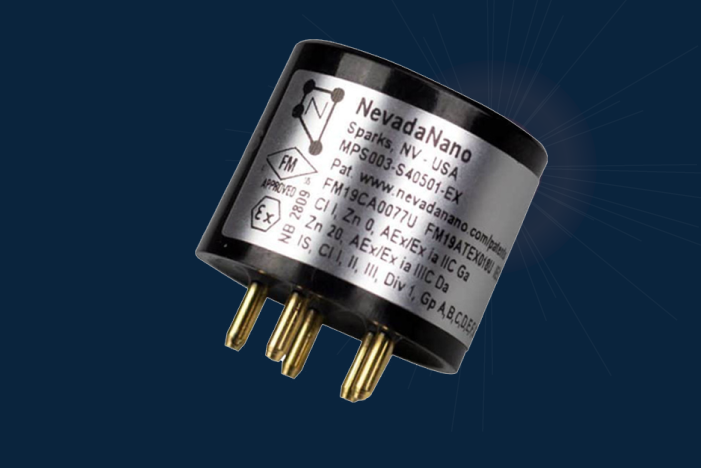
For OEMs and system integrators building R-290 propane detection into their equipment, NevadaNano’s MPS™ Flammable Gas Sensor delivers calibration-free propane gas detection validated to UL/IEC 60079-29-1 Annex A and UL/IEC 60335-2-40 (2022) standards — with a 15-year sensor life.
Conclusion
Propane is a great choice for industrial refrigeration due to its low GWP, energy efficiency, and natural abundance. As regulations around refrigerants continue to evolve, propane is becoming a top contender in the race for sustainable, safe, and cost-effective refrigeration solutions.